
IVR — SIP Header Fields
Common SIP Header fields carry information CCaaS can read to identify a call and route it accordingly.
A call's SIP Header carries fields that CCaaS can read to identify where it should go — through a Parameter condition using the SIP Header type, or a rule in Call Routing. The exact fields present and their format vary by carrier and phone system, so only fields actually passed through in live traffic can be used.
Confirming What's Present in Live TrafficA capture tool such as Wireshark, or a sample trace requested from the carrier or UC platform, confirms the exact header fields and format present before building a Parameter condition or Call Routing rule around one.
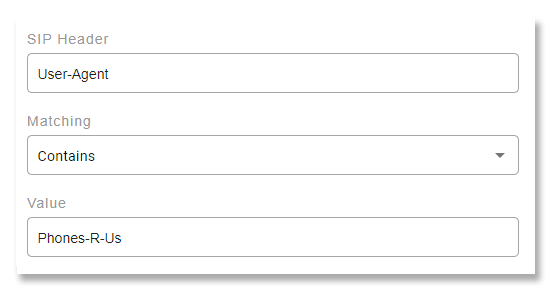
User-Agent
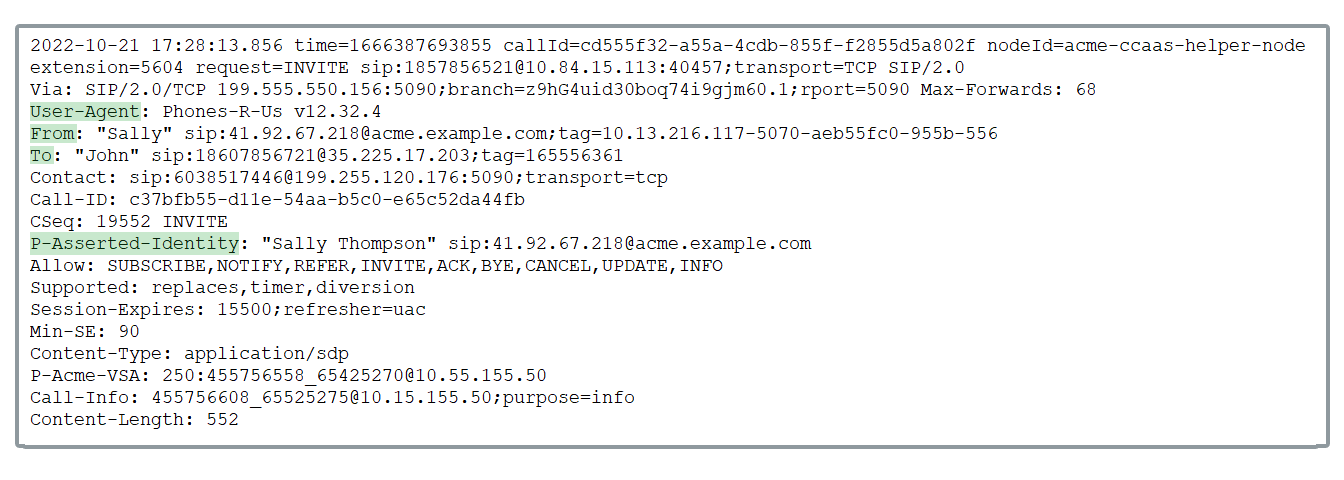
User-Agent: Phones-R-Us v12.32.4
The USER-AGENT header field describes the device or system that originated the SIP request.
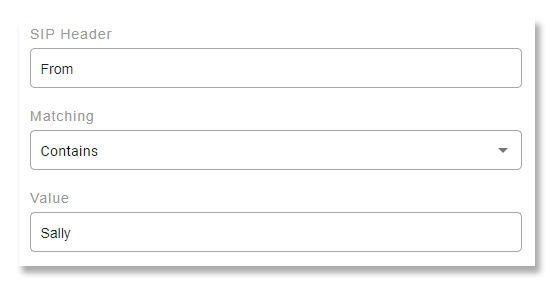
From
From: "Sally" <sip:[email protected]>
The FROM header field indicates the contact information of the call's initiator — "Sally" in this example.
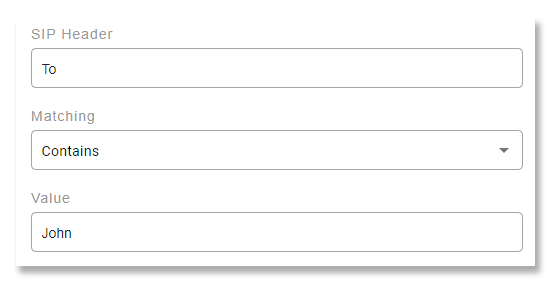
To
To: "John" <sip:[email protected]>
The TO header field contains information about the called party — "John" in this example. This is often where a dialed number, extension, or a prefix added by a UC platform appears — see Call Routing Methods for a worked example of matching against this field.
P-Asserted-Identity
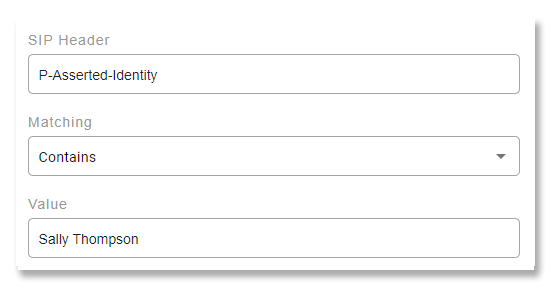
P-Asserted-Identity: "Sally Thompson" <sip:[email protected]>
The P-ASSERTED-IDENTITY header field carries the verified identity of the user sending a SIP message, used among trusted SIP entities. It is commonly used in call centers to present a customer's calling number rather than the raw telephone number — "Sally Thompson" in this example.
Additional Header Options
CONTACT, FROM (Caller ID Only), and REFERRED-BY are also selectable as a SIP Header type in a Parameter condition, alongside a free-form option for any custom header a phone system supplies. See Parameters for the full list.
Updated 3 months ago